2026-11-05
Share


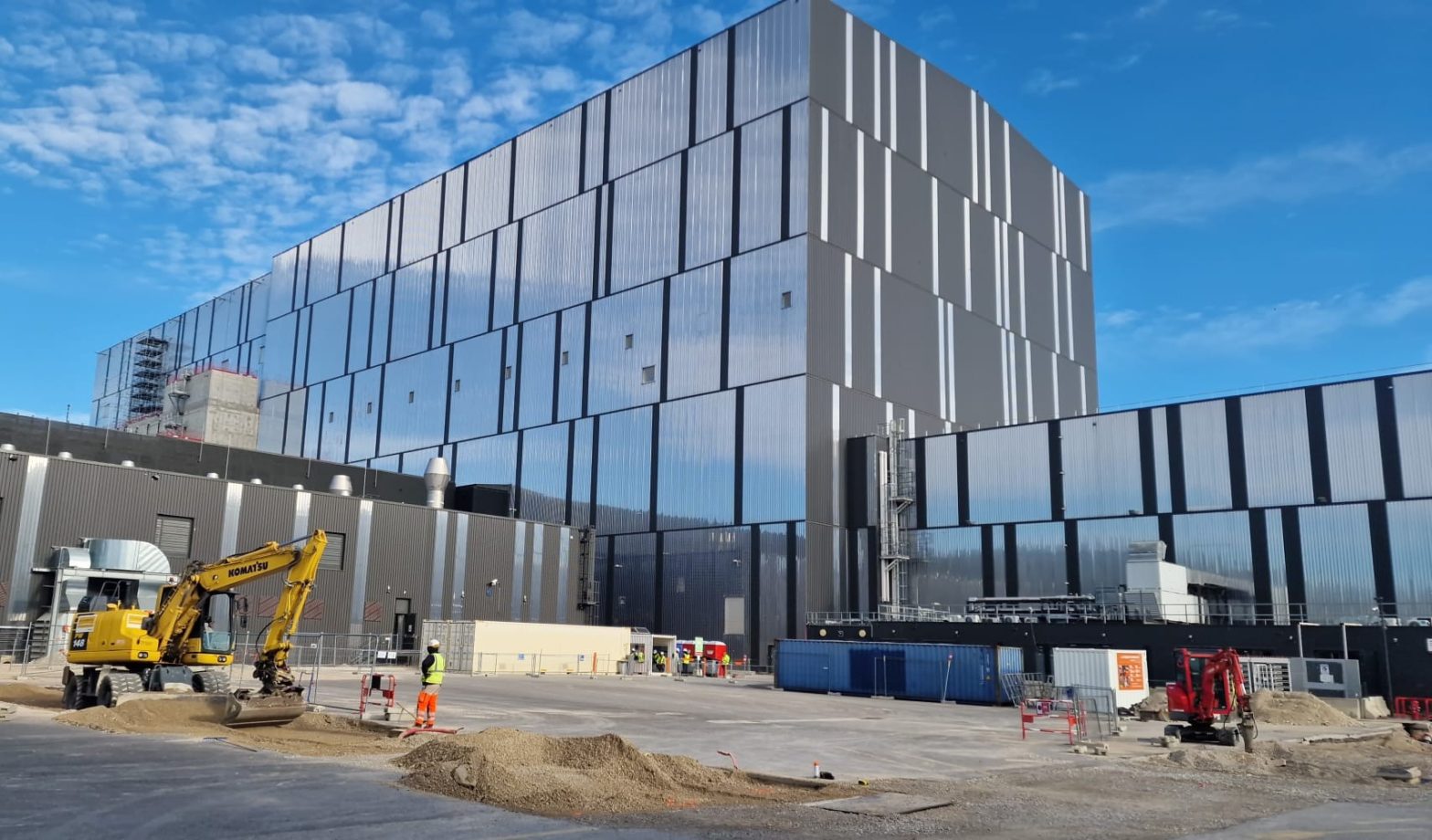
Preparatory works for the future ion cyclotron heating building next to the ITER Assembly Hall. October 2026. ©F4E
ITER ranks among the most ambitious scientific projects in history. A commanding view of its site gives a sense of the experiment’s scale. In this 42-hectare platform, the Tokamak Complex dominates the skyline, surrounded by numerous auxiliary plants and areas. Europe is responsible for the construction of this vast infrastructure. Fusion for Energy (F4E) in collaboration with European companies has already built most of it, but there will soon be more facilities in ITER’s landscape.
The construction teams are preparing the ground for three new buildings and two bridges. They were not part of the original site layout. Their addition responds to ITER’s revised research plan, which foresees an increase in external heating capacity. The buildings will host different systems: one is for electron cyclotron heating, one for ion cyclotron heating, and the third for cooling equipment. The two bridges will carry the transmission lines to the Tokamak Complex.
F4E and its Architect-Engineer contractor, the b.NEXT consortium, delivered the final design this summer. Shortly afterwards, ITER Organization selected F4E to manage the construction –a recognition of Europe’s track record in civil engineering.
The schedule leaves no room for delay, so the project hit the ground running. On both sides of the Tokamak Complex, works are already underway to lay the foundations of the new buildings.
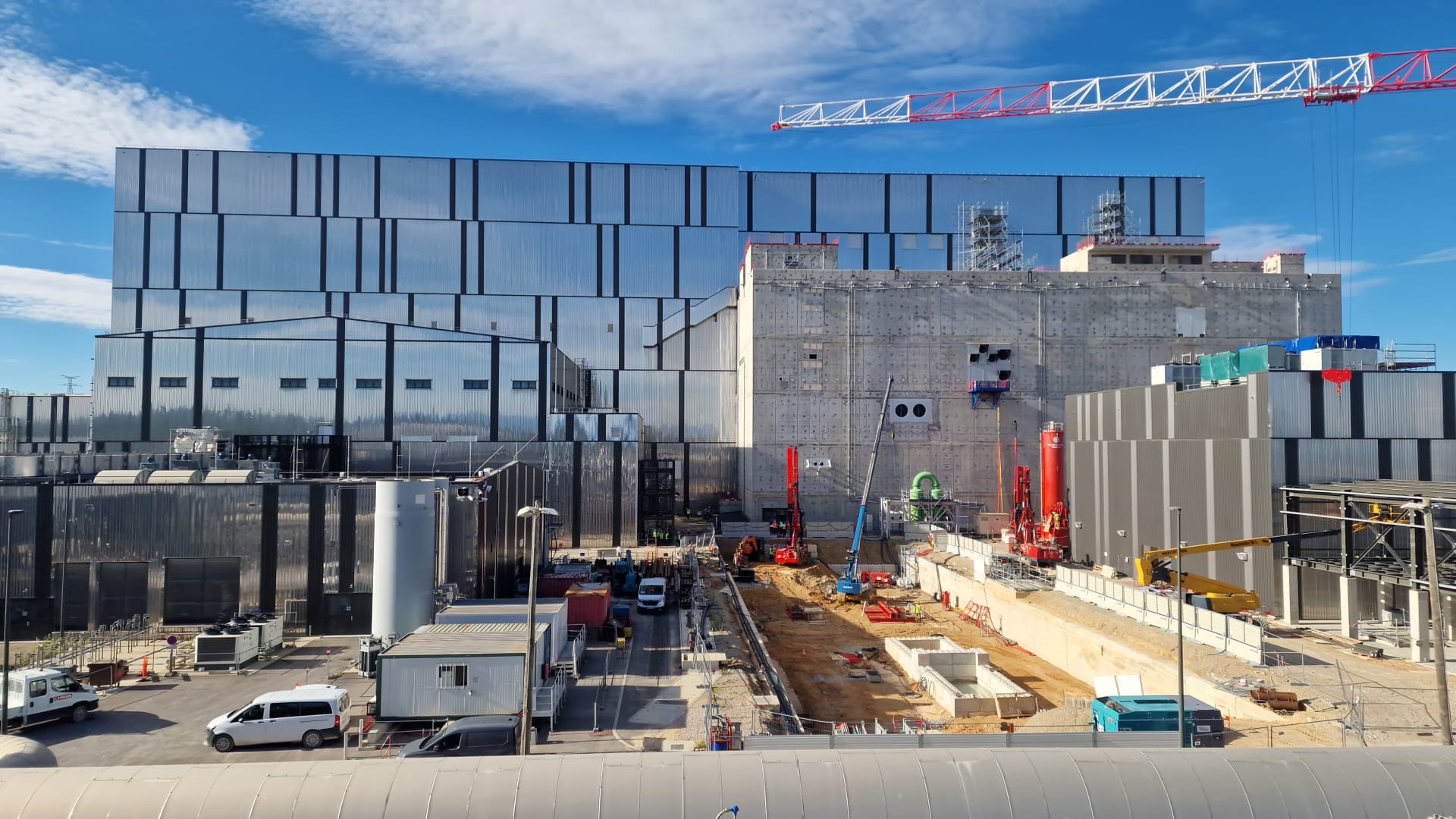
The first task was clearing the way. The Spie–Chapus–Monteiro consortium worked underground to re-route various water networks running where the facilities will stand. Then, Ferrovial took over to drill micropiles deep into the ground. These metal elements will keep the buildings’ heavy load stable. It’s a precise job: “We are not building on bare land. There are lots of galleries and networks underneath. This congestion obliges us to place each micropile in a very accurate location to avoid any clash,” explains Gaston Hanna, Civil Engineering Senior Expert at F4E.
“Our contractors managed to be very effective in a short time frame,” says Charlène Debeauvais, Construction Works Project Manager at F4E. The teams aim to complete preparatory works by the end of this year, so construction can start in early 2027. F4E will soon award the contract for the civil works of the new buildings and bridges. Throughout the project, F4E will be working hand in hand with ITER Organization (IO), the site owner. “IO is more involved than in usual F4E contracts. This close collaboration will allow us to optimise the technical and contractual management of the construction,” asserts Debeauvais.