2026-07-09
Share


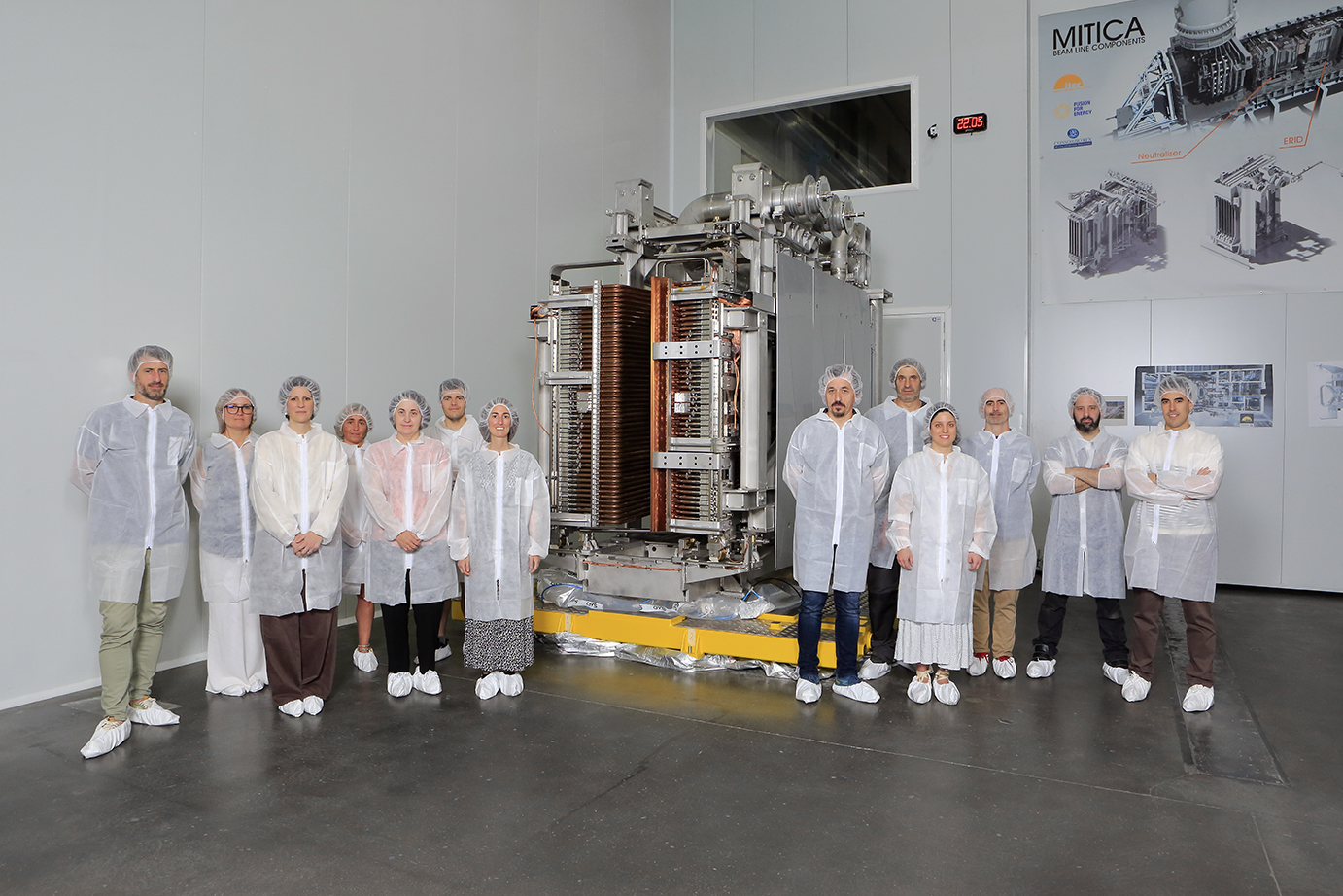
Part of the AVS project team next to the calorimeter at the workshop in Elgoibar (Spain). ©Added Value Solutions (AVS)
At the Neutral Beam Test Facility, a powerful fusion technology is taking shape. In this research centre in northern Italy, experts are building the Megavolt ITER Test Injector and Concept Advancement – known by the snappy acronym of MITICA. This is a full-scale prototype of ITER’s Neutral Beam Injectors, which will play a major role in heating the plasma up to 150 million ºC for atoms to fuse.
The technology has been used before, but ITER’s injectors are unprecedented in size and power. They will each deliver 16.5 MW of energy by shooting high-speed neutralised particles into the plasma. To secure the technical leap, Europe, Japan, ITER Organization, and Consorzio RFX partnered to build MITICA as a first-of-a-kind demonstrator. Fusion for Energy (F4E) took on most of the components, including the beam source, beam line, power supplies and cryopumps.
In recent weeks, F4E and its suppliers delivered the last two major MITICA components. The first was the beam source, assembled and tested by ALSYMEX in Tarbes (France). From there, the system was shipped by road to the test facility in Padua. Shortly after arriving, it passed helium leak tests, proving it is vacuum-tight and ready.
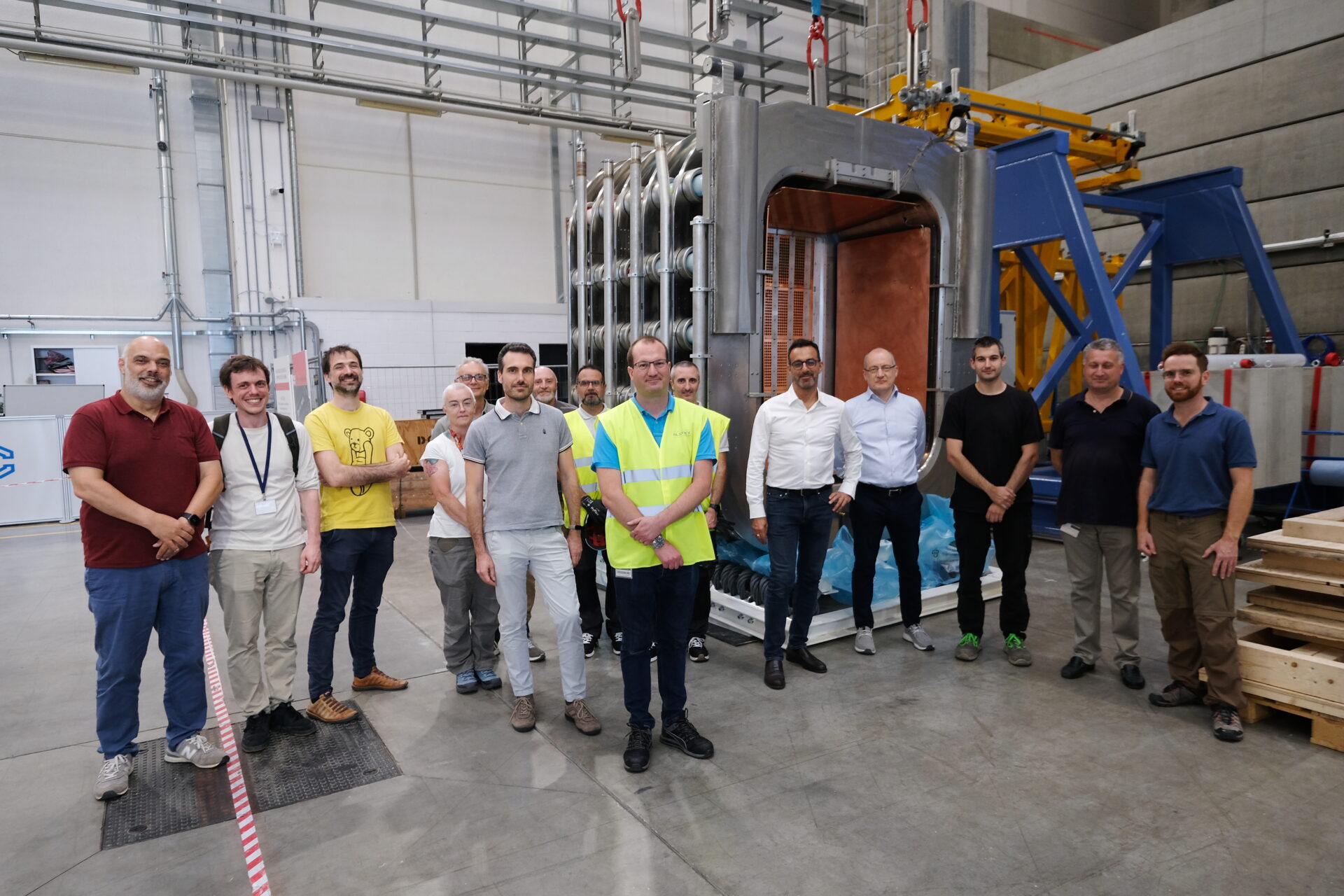
Two weeks later, a new package arrived: the calorimeter. This component forms part of MITICA’s beam line together with the neutraliser and the ion dump, delivered in 2024. F4E worked with the Spanish AVS–Tecnalia consortium to manufacture these technologies.
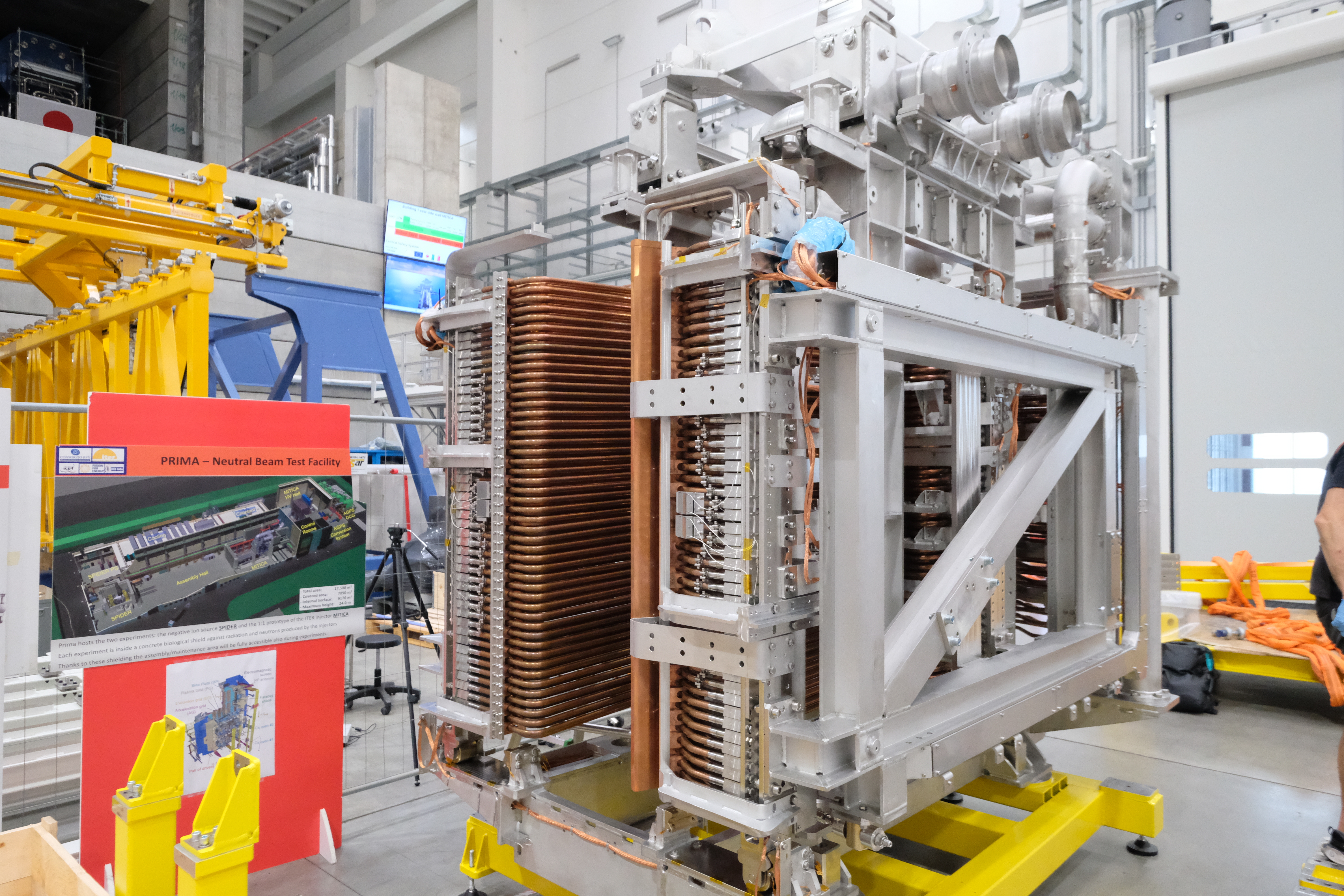
What is the calorimeter’s role? The component can be likened to the injector’s exit gate. Through a set of sensors, it measures the power of the beam and lets it through to the plasma when it reaches the required parameters. However, throughout MITICA’s beam tests, the calorimeter will remain in closed position. Given the extreme energy loads it will face, the component features an array of cooling water pipes to dissipate the heat.
The calorimeter’s geometry left little room for error during fabrication. The swirl shape of the tubes and sheer number of joints required a methodical and precise welding workflow. The suppliers shaped and assembled all bundles through specialised techniques. Their efforts and skill paid off, as the component completed final tests.
“The teamwork between F4E and AVS-Tecnalia turned a complex design into reality, successfully producing and integrating the various technologies. Our suppliers showed technical excellence and consistently acted in the best interests of the project,” said Eduard Bragulat, Technical Officer at F4E.
“The delivery and site tests of the calorimeter mark a major milestone within our contract. The MITICA beam line project has significantly strengthened AVS’s capabilities in the design and manufacturing of fusion technologies and it is a strong foundation for our future contributions to this market,” expressed Mónica Iriarte, Project Manager at AVS, an SME headquartered in the Basque Country.
Back at the Neutral Beam Test Facility, experts are carrying out the last inspections of the newly arrived components. Once completed, they will be ready to take their place in MITICA. Consorzio RFX will soon begin preparing for the installation of the beam source and beam line, expected to start next year. In parallel, F4E, ITER Organization, RFX and AVS-Tecnalia will work to provide an upgraded calorimeter, which will come into play later, during high-power operations.