2026-11-17
Share


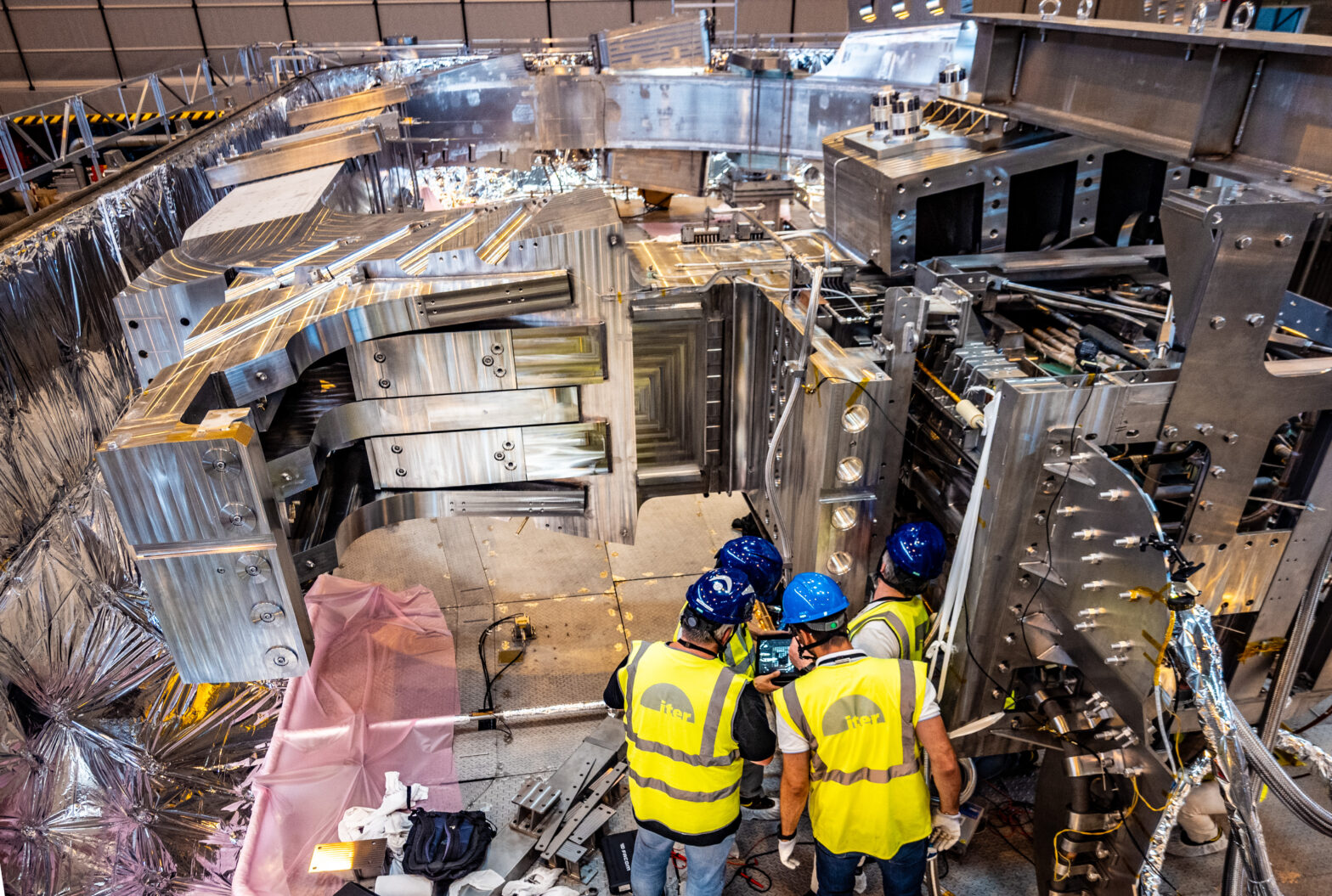
ITER engineers examine the connections on toroidal field coil #17 at the Magnet Cold Test Facility in late August. ©ITER Organization
At ITER, massive superconducting magnets will confine the ultra-hot plasma. Their strong magnetic fields will keep charged particles suspended, away from the reactor’s walls. Generating these fields requires three extraordinary ingredients.
First, pumps must create an ultra-high vacuum, at a pressure around one billion times below atmospheric pressure. Then, the coils will be cooled down to 4 K (-269 ºC), close to absolute zero, to lose electrical resistance. Lastly, they will be fed with enormous electrical currents, thousands of times greater than those in a typical household circuit.
Such extreme conditions are very hard to reproduce anywhere but in ITER. Until recently, the plan was for the magnets to be tested only once installed in the machine, as part of ITER’s commissioning. However, the revised ITER schedule opened a new window of opportunity. With all coils delivered by Europe and other ITER parties and infrastructure like the cryoplant in place, ITER Organization decided to set up the Magnet Cold Test Facility.
The testbed was designed and built in record time at the former Poloidal Field coils factory, on site. Within a short timeframe, it aimed to test a sample of Toroidal Field coils from different manufacturers, along with the smallest Poloidal Field coil (PF1). Japan’s TF7 was first, reaching a 10 kA current and delivering positive results.
This Autumn, the turn came for TF17, one of Europe’s 10 D-shaped coils. Each measures 17 x 9 m and weighs 320 tonnes— as much as an Airbus A350. At least 40 European companies and 700 people were involved in their production.
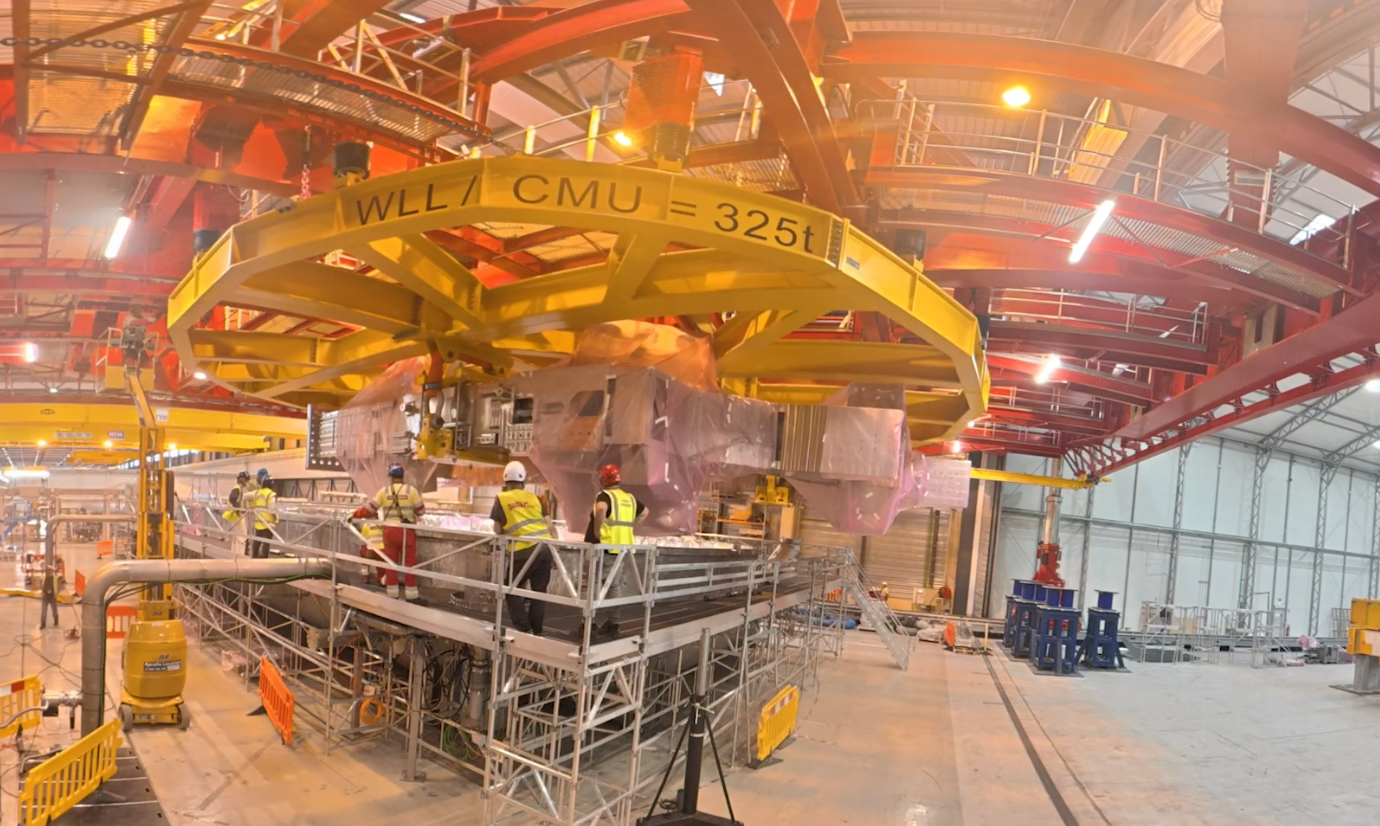
The tests were a marathon of several weeks. Inside a massive steel cryostat, the coil was cooled down for ten days until it reached 4 K. Once in a superconducting state, the team energised it, gradually ramping up current. Then came the biggest milestone: for the first time, an ITER coil reached 34 kA (34,000 amperes), half the operating current. The operators maintained it for 6 hours and discharged safely. The final stage was to bring the magnet back to room temperature, taking another ten days.
Throughout the campaign, engineers monitored and compared the coil’s behaviour with the predictions. For instance, they checked how the forces in play affect the coil’s joints and structure. But the tests were about more than the magnet. For the teams, it was a valuable rehearsal for the commissioning and operation of ITER.
Around 30 experts took part in the campaign. They worked in several shifts, from early morning to evening, with some staying on call during nights and weekends. The nerve centre was in ITER’s Main Control Room. From there, the teams operated different systems, including cryogenics, vacuum, power supplies, and instrumentation and control, and monitored dozens of parameters in real time.
F4E Engineer Romain Pierrot was one of them. “As an electrical engineer, being part of these tests is an incredible opportunity to see cutting-edge coils come to life.” he explains. “The tests are not only for debugging systems. They are a collective training. This experience will help us refine commissioning protocols and strengthen coordination between teams. It was a long and intensive month, but it has clearly paid off,” he insists.
After a period of upgrades, tests will resume at the Magnet Cold Test Facility. Next in line is Japan’s TF19, which is expected to reach an ambitious 68 kA current.